It is crazy to think that we are already half way through the internship. It really does seem like it just started. I can't describe how excited I am to start on the high tunnel with Mr. Varnell. I think we are going to have a great time and learn a lot. I was doing research on the types of foods that people grow in high tunnels and this just gets me excited to try and do well! I'm hoping that I come out of the project with a better understanding of the steps and processes one must go through when starting crops from scratch.
I will explain more about the following topic tomorrow (Monday), but I had a bit of an accident last Friday and am recovering from a laceration in my hand/wrist on my right hand. This is definitely going to be a challenge, but I am hopeful that it won't hinder me all that much in the coming weeks. If anything, having accidents can open ones eyes as to the fortune of being able to have two legs, two arms, two hands, etc.
Going off of the personal growth that I'm hoping to achieve from working on the high tunnel... I think it is appropriate for me to express and reflect on what I have gotten from this internship thus far. When we all went through interviews I expressed that I have had limited hands on experience with farm work and I wanted to gain this. Not only has this happened, but many of my philosophies and future plans have changed because of the experiences I have had this summer. I never even thought about starting my own garden, growing food, or the wide reaching implications of our food system. Obviously, I had given these topics some consideration, but our discussions have really opened my eyes in regards to many of the deeper problems and contradictions of our food system. For example, buying organic doesn't necessarily mean no pesticides/herbicides (as I previously thought) and organic products don't translate into social justice for farm workers. The different dynamics continue to blow my mind. I feel very grateful and fortunate to be working with and a component of something so special!
Sunday, July 7, 2013

Pictures!
I finally found the cord for my camera so here are some pictures from our field trips, enjoy.


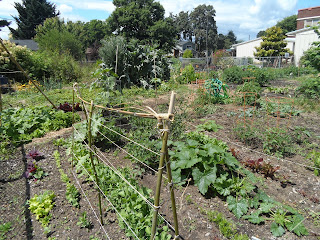


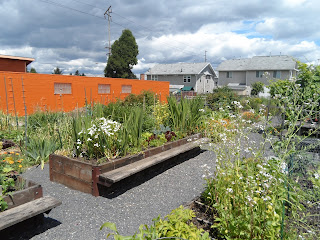
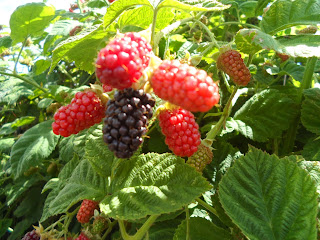


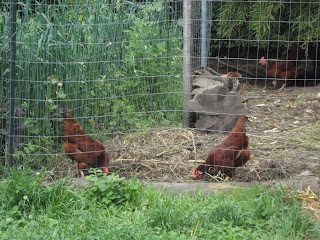


Portland Urban Gardens




Oregon State


Tuesday, July 2, 2013
Native American Agricultural History in the Williamette Valley
In a brief overview, I will cover the history of Native American agriculture in the Willamette Valley:
Before colonialists overpowered native peoples of the Willamette Valley in the 1800s, the land was occupied by multiple Native American groups. These groups included the Molalla people, the Clackamas people and the Kalapuya people. The Kalapuya people were the most predominant in the valley. They relied on the Willamette River for prosperity.
The groups heavily relied on salmon for food, yet also were able to harvest a variety of food sources such as berries, nuts and grasses. Due to the Willamette Valley being so prosperous with vegetation, these Native American groups had to rely on farming techniques much less than peoples of the mid-west. Throughout the year, the Native American groups of the valley would temporarily move to important resource areas in an annual cycle. They would harvest and store resources such as camas, seeds, basketry materials, acorns, animals and fish. Natives in the Grande Ronde area, which were primarily of the Molalla people, would leave their reservations for the seasonal harvesting of hops, berries, beans and timber. Many males would harvest timber while the rest of the family went to pick berries or go to the hop fields. The areas most plentiful were where Eugene and Portland now are. Peoples from states as far as Arizona would travel to the Willamette Valley in order to participate in the summer harvest.
Even though not commonly thought of as an agricultural resource, the Native American groups of the Willamette Valley used rivers as a primary resource for food. Similar to how farmers manipulate soil in order to create more plentiful harvests, Native American groups maximized the potential of the harvestable resources in the rivers. For example, they would rearrange the rock formations in the rivers in order for the salmon to have the most suitable areas to spawn eggs. They would also regularly clean the rivers in order to make sure the salmon were able to access these spawning areas successfully. Once the salmon had laid their eggs, people would often look after the eggs to make sure that they were safe until they hatched. Hence, these peoples were able to have rich harvests of salmon that would last them all through the winter by using smoking and storing methods.
The Native American groups planted crops as well. Wheat was an ideal crop in order for the groups to produce grains. Tomatoes were also an essential of the valley. The groups would rotate where these crops were planted each year in order to avoid disease and infestation of the crops. The food was plentiful and the land was healthy for these Native peoples of the Willamette Valley.
In the 1830s, French Canadians established the French Prairie farming region in the Willamette Valley. They took the area by force and took over prominent harvesting areas for the Native American peoples. They recruited many Native Americans to work for them, promising them richer harvests that what they could ever have on their own. Plus, the Native Americans already knew how to properly manipulate the land in order to create the most plentiful harvests. This was an attractive attribute for the French Canadians. Many Native American peoples were forced into work. For example, Native American children were stolen from their homes and forced into labor. Over the next century, the rich lives of these Native American groups crumbled under the rapid expansion of colonialists. By the 1950s, almost all Native American groups of the Willamette Valley had stopped their agricultural practices in order to pursue wage-based jobs.
It absolutely amazes me to think that it was only two centuries ago -- a handful of generations -- when this dominant takeover of Native American groups occurred. It was only in the 1800s when the United States claimed the Oregon Territory as its own. This is the generation of our grandparents' grandparents! Yet with practices such as sustainable agriculture rapidly progressing in the Willamette Valley, hopefully these Native American peoples can be reconnected with their prosperous past-time of living a connected life with their surrounding environments.
Sunday, June 30, 2013
Friendly Reminder to Self
It's crazy to think that we have already been working on the farms for three weeks. The time has just flown by. The initial thrill is beginning to wear down and I have begun to fall into a pleasant routine. It's funny to think that as a kid I would do anything to get out of weeding the garden and now I don't mind it. Being able to simply be outside and feel like I have accomplished something for the day is truly rewarding. As we discussed after the movie Dirt! academics has its place and the classroom setting can be valuable but nothing beats getting down into the heart of things and working.
Today, our day off, Sophie and I went blueberry picking. I guess you could say that we just couldn't stay away from the farms. The blueberries in our fridge are now quickly disappearing as the taste of our hard work can't be beat. Pushing past the heat and exhaustion is worth the benefits and I believe more people need to feel this unbeatable feeling. What makes this mornings work even better is the fact that we picked on a share, meaning the owner kept half of what we picked and we got to take the rest for free. These avenues are becoming more and more available for people to become a part of. With food stamps being taken at farmers markets and share harvesting, it's getting harder and harder for people to justify not eating good food.

Today, our day off, Sophie and I went blueberry picking. I guess you could say that we just couldn't stay away from the farms. The blueberries in our fridge are now quickly disappearing as the taste of our hard work can't be beat. Pushing past the heat and exhaustion is worth the benefits and I believe more people need to feel this unbeatable feeling. What makes this mornings work even better is the fact that we picked on a share, meaning the owner kept half of what we picked and we got to take the rest for free. These avenues are becoming more and more available for people to become a part of. With food stamps being taken at farmers markets and share harvesting, it's getting harder and harder for people to justify not eating good food.

Going into this extra hot week, I know it's going to be important for me to remember all these benefits and reflect on the reasons I joined this internship. Heat and I may not get along, but I am determined to not let it defeat me in the next couple of days and keep a positive attitude.
How To: Approaching Frustration
This week I faced my first experience of doubt. On Monday we spent 90% of our time hoeing a field of beets, strawberries and carrots. It only flashed through my mind momentarily as I acknowledged the burning sensations in my shoulders from the repetitive movement. I found myself wondering how individuals can do this work everyday, whether on their own farm or on another's just for a miniscule hourly wage. As the work day came to a close and I was falling asleep, all I could see behind my eyelids was the hoe cutting through the roots of the morning glory and thistle guided by the handle and my hands - over and over and over. Hoeing that day did not make me feel as though I was incapable of farm work but it was one of the first times that I felt the physical exhaustion WHILE working - instead of afterwards. Wednesday supplied us with a nice reprieve from the repetitive motions that David works very hard to keep us away from. We spent the majority of the time harvesting and washing produce which is always the most satisfying. These are the days that I will come back to in my path toward handling the frustration that comes with some duties of the farm.
It was then Thursday afternoon when Jessie and I were given the tasks of clearing JUST the thistle out of the beet and cabbage rows. It sounds very simple in theory and it really is fairly mind-numbing if you allow it to be - in practice it proved to be the most mentally trying task we had faced since beginning our journey at becoming "knowledgeable". When I was feeling this creeping sensation of anger come across my skin and spine as I felt the burning prick from thistle after thistle, I began challenging myself as to how I can make this enjoyable. This was a task that needed to be done and no part of me wanted to do it. As the frustration would wane and crest as the amount of thistle in a single area would grow and fade I began finding my emotions to be hilarious. I was actually physically, mentally and emotionally ANGRY at these damn thistle! I even said to Jessie, "if this thistle had a face it would be punched many times". This was a product of my tolerance for pain decreasing, the air becoming hotter and time passing and it all was out to get me - I was sure of it.
Looking back on the emotions I was feeling during the thistle extraction I have reflected on how I am to move forward from those feelings of frustration with farm work and how I can apply it to the rest of my experience. One of the main motivations I found from that afternoon was that I am allowed to be annoyed at what I am doing. That is what motivates a farmer to get out on the fields every day and weed for hours is so they can NOT have the experience of pulling mature thistle out of a delicate beet row. Everything that we do at Gaining Ground and at any organic farm is fight the forces of nature with raw endurance. From this trying afternoon - and week for that matter - I have had the realization that farm workers and owners - as long as they are fighting the constant attacks that come from organic farming - have the most patience out of any other job. To be able to fight the battle but never quite win the war - day after day - would require serenity beyond belief or one heck of a sailors mouth. I hope that I am able to muster half the patience that these individuals carry at some point in my life but hopefully before I enable my dream of owning my own farm.
It was then Thursday afternoon when Jessie and I were given the tasks of clearing JUST the thistle out of the beet and cabbage rows. It sounds very simple in theory and it really is fairly mind-numbing if you allow it to be - in practice it proved to be the most mentally trying task we had faced since beginning our journey at becoming "knowledgeable". When I was feeling this creeping sensation of anger come across my skin and spine as I felt the burning prick from thistle after thistle, I began challenging myself as to how I can make this enjoyable. This was a task that needed to be done and no part of me wanted to do it. As the frustration would wane and crest as the amount of thistle in a single area would grow and fade I began finding my emotions to be hilarious. I was actually physically, mentally and emotionally ANGRY at these damn thistle! I even said to Jessie, "if this thistle had a face it would be punched many times". This was a product of my tolerance for pain decreasing, the air becoming hotter and time passing and it all was out to get me - I was sure of it.
Looking back on the emotions I was feeling during the thistle extraction I have reflected on how I am to move forward from those feelings of frustration with farm work and how I can apply it to the rest of my experience. One of the main motivations I found from that afternoon was that I am allowed to be annoyed at what I am doing. That is what motivates a farmer to get out on the fields every day and weed for hours is so they can NOT have the experience of pulling mature thistle out of a delicate beet row. Everything that we do at Gaining Ground and at any organic farm is fight the forces of nature with raw endurance. From this trying afternoon - and week for that matter - I have had the realization that farm workers and owners - as long as they are fighting the constant attacks that come from organic farming - have the most patience out of any other job. To be able to fight the battle but never quite win the war - day after day - would require serenity beyond belief or one heck of a sailors mouth. I hope that I am able to muster half the patience that these individuals carry at some point in my life but hopefully before I enable my dream of owning my own farm.
Dirt and additional thoughts
I just finished watching the documentary for this week and all in all I thought it offered a new change of pace. Even though the film discussed and went into the social and human element of soil, dirt, and living styles... I really appreciated the movie diving into a scientific lens. For me, it was really interesting to hear the parts about microorganisms, the compounds, and all of the different uses for dirt, soil, etc. I also really enjoyed that they brought different cultures into the picture and hit various parts of the globe in the documentary.
A reoccurring theme in the movies and in different stories I have heard, is prison inmates using gardening as a way to overcome their troubles and poor situation. A number of years ago I heard about this type of thing for adolescents in juvenile detention and I think it is great that this has been tested with adults as well. It is clear that this has served as a positive avenue for many individuals. It seems like such an easy program too. It doesn't seem like a whole lot would have to be overcome to start programs like that everywhere because it is not like there is a financial burden.
I have started to reevaluate the way I want to live my life in the future. During the movie today I was blown away by the man and woman who were building homes in LA using dirt and that when it dried, it was very strong and durable. I never really knew these types of options existed. There seems to be so many alternatives to the status quo that I have been ignorantly unaware of and I'm happy that I'm starting to understand these better
A reoccurring theme in the movies and in different stories I have heard, is prison inmates using gardening as a way to overcome their troubles and poor situation. A number of years ago I heard about this type of thing for adolescents in juvenile detention and I think it is great that this has been tested with adults as well. It is clear that this has served as a positive avenue for many individuals. It seems like such an easy program too. It doesn't seem like a whole lot would have to be overcome to start programs like that everywhere because it is not like there is a financial burden.
I have started to reevaluate the way I want to live my life in the future. During the movie today I was blown away by the man and woman who were building homes in LA using dirt and that when it dried, it was very strong and durable. I never really knew these types of options existed. There seems to be so many alternatives to the status quo that I have been ignorantly unaware of and I'm happy that I'm starting to understand these better
Tuesday, June 25, 2013
Duncan and Urban Roots
Thought I would take a moment to reflect on a couple of experiences from last week and this week. First, I can't get over the moment during our trip when the SUV pulled up next to us blasting some serious rap music.. only to be outdone by our very own sustainability coordinator. It still makes me laugh to think about... in fact... I'm laughing now. The power of humor!
On a more serious note - I watched Urban Roots last night and was very inspired to see a movie essentially filmed about people coming together to make something out of nothing. Many of the people they had on the film were impoverished, had little education, and some were criminals, but they all came together over their gardens. As we talked about... this shows a situation where there really is no other option for these people, but I was very much so encouraged to see that humans can rise above unfortunate circumstances to make something positive happen. If these people can do it, then is there a reason why we cant?
On a more serious note - I watched Urban Roots last night and was very inspired to see a movie essentially filmed about people coming together to make something out of nothing. Many of the people they had on the film were impoverished, had little education, and some were criminals, but they all came together over their gardens. As we talked about... this shows a situation where there really is no other option for these people, but I was very much so encouraged to see that humans can rise above unfortunate circumstances to make something positive happen. If these people can do it, then is there a reason why we cant?
Subscribe to:
Posts (Atom)